
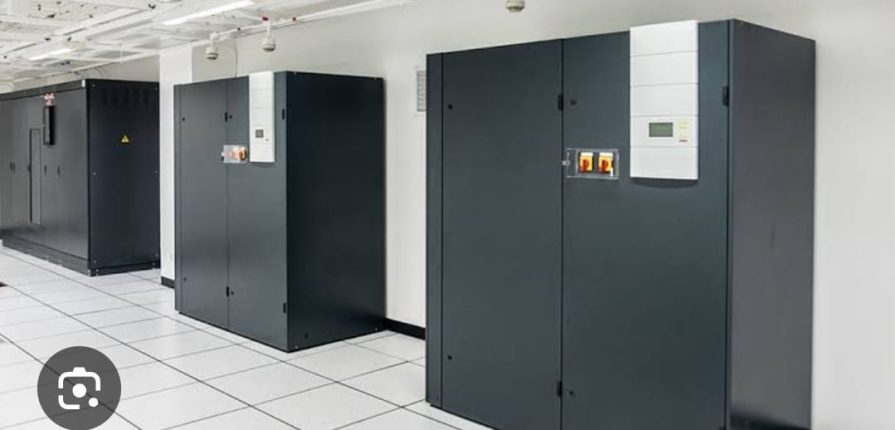
In the world of mission-critical IT, from data centers to communication hubs, the air you breathe isn’t just for comfort—it’s the lifeblood of your technology. While a standard air conditioner might cool a room, it can’t handle the intense, concentrated heat of modern servers. This is where precision cooling becomes indispensable..
What is Precision Cooling and Why is it Different?
Precision cooling, often referred to as precision air conditioning (PAC) or computer room air conditioning (CRAC), represents a specialized type of climate control tailored for mission-critical settings. Unlike conventional “comfort cooling” systems used in residential and office spaces, which prioritize human comfort, precision cooling is crafted to sustain a stable and tightly regulated environment for delicate electronic devices.
The main objective of a precision cooling system is to address the high and concentrated heat output produced by IT equipment, such as servers, while ensuring that specific temperature and humidity levels are consistently maintained around the clock.
Key Characteristics and Distinctions from Comfort Cooling:
- High Sensible Heat Ratio (SHR): This aspect is one of the most significant contrasts. Sensible heat refers to the dry heat an air conditioner eliminates to reduce air temperature, whereas latent heat pertains to the heat removed for dehumidification. IT equipment predominantly emits sensible heat. Precision cooling systems are designed with a notably high SHR (generally between 0.95-0.99), indicating that a substantial portion of their cooling capability focuses on removing sensible heat. In comparison, comfort cooling systems have a considerably lower SHR (about 0.60), as they allocate a significant amount of energy toward dehumidifying the air for human comfort.
- Accurate Temperature and Humidity Regulation: Precision cooling units maintain a narrow range for temperature and humidity, often with tolerances as tight as ±1∘°C and ±5% relative humidity (RH). This precision is vital to avert equipment damage, overheating, and problems like electrostatic discharge, which can arise in overly dry conditions, or condensation that can occur in humid scenarios.
- Uninterrupted Operation: IT equipment operates continuously, 24/7, throughout the year. Precision cooling systems are engineered for this continuous functioning, utilizing industrial-grade components and often incorporating redundancy to ensure consistent cooling and avoid any downtime. Comfort cooling systems are not built to handle this level of dependability or operating cycle.
- Increased Airflow: Precision cooling systems circulate a significantly greater volume of air at an elevated velocity to effectively manage the high-density heat loads from server racks and other devices. This capability helps to avert the emergence of “hot spots” within a data center.
- Air Filtration: Typically, these systems come equipped with advanced air filtration to eliminate dust and pollutants from the air, which can be harmful to electronic components over time.
Notable Use Cases:
- Precision cooling is crucial in settings where stable and reliable operation is imperative, including:
- Data Centres and Server Rooms
- Telecommunications Facilities
- Medical Laboratories and Hospitals
- Cleanrooms
- Network Operations Centres (NOCs)
- Industrial Control Rooms
Recent Comments